Introduction: What is SEO and Why Should You Care?
Imagine you’ve just opened a fantastic new coffee shop. You have the best coffee, comfortable seating, friendly staff—everything is perfect. But there’s one problem: your shop is hidden down a tiny alley with no sign. No one can find you! No matter how great your coffee is, if people don’t know you exist, you won’t have customers.
That’s exactly what happens to websites without SEO.
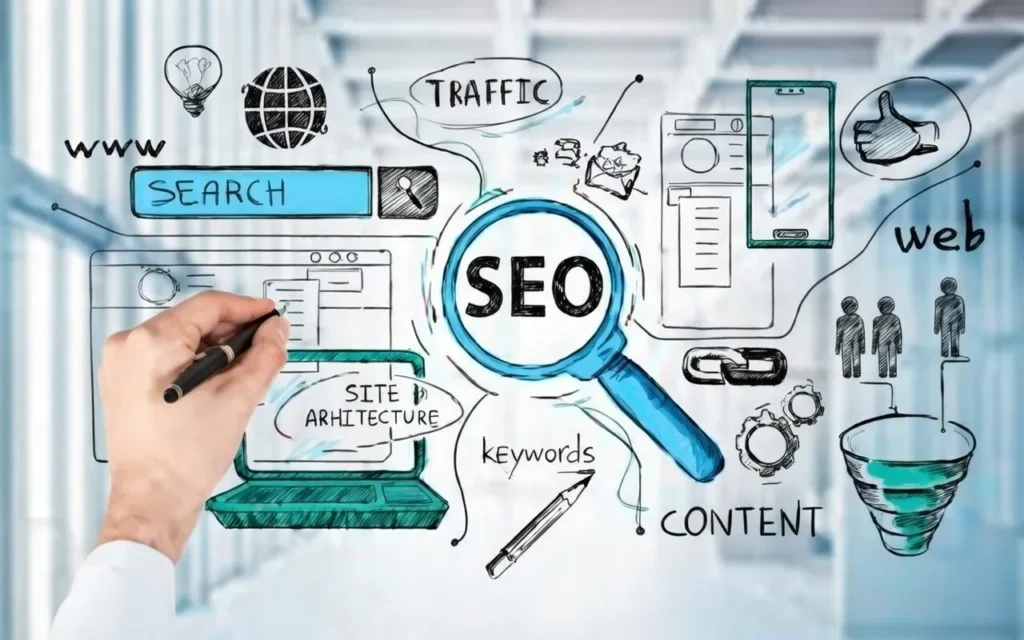
SEO (Search Engine Optimization) is simply the process of putting up clear signs, creating a map to your location, and making sure people who want coffee can actually find your shop. In technical terms, it’s optimizing your website so that search engines like Google, Bing, or Yahoo can understand what you’re about and show your website to people who are searching for what you offer.
Let’s make this even simpler with a real example:
When you type “easy chocolate chip cookie recipe” into Google, you get millions of results. The websites on that first page didn’t get there by magic. They used SEO to tell Google: “Hey, we have exactly what that person is looking for!” And Google rewarded them by placing them at the top.
The main goal of SEO is to increase organic (free) traffic to your website. Unlike paid ads where you pay for each click, SEO helps you get visitors who find you naturally when they search. Think of it like this: paid ads are like renting a billboard, while SEO is like building a landmark that people naturally come to visit for years.
Why is SEO Important? (The Real-World Benefits)
1. Increases Website Visibility
Your website might be beautiful and filled with amazing content, but if no one sees it, what’s the point? SEO is like turning on the lights in a dark room. According to recent studies, 75% of users never scroll past the first page of search results. If you’re not on page one for your important topics, you’re essentially invisible to most of your potential audience.
2. Brings Targeted Traffic
SEO doesn’t just bring visitors—it brings the RIGHT visitors. When someone searches for “vegan meal plans for beginners” and finds your vegan blog, that person is already interested in exactly what you offer. They’re not just randomly browsing; they’re actively looking for solutions that you provide. This targeted traffic is much more likely to read your content, sign up for your newsletter, or buy your products.
3. Builds Trust and Credibility
Have you ever noticed how you trust websites that appear at the top of Google? There’s a psychological effect here: when Google shows your website at the top, people automatically think, “This must be a good, trustworthy source.” Being in those top positions builds authority in your field. People start seeing you as an expert, which makes everything else—selling products, getting email subscribers, growing your audience—much easier.
4. Cost-Effective Compared to Paid Ads
While SEO takes time to work, it’s incredibly cost-effective in the long run. With paid advertising (like Google Ads), you pay every time someone clicks, and the moment you stop paying, the traffic stops. With SEO, once you rank well for a topic, you can get free traffic for months or even years from that same piece of content. It’s an investment that keeps paying off.
5. Helps Businesses Grow Online
Whether you’re a small local bakery or a large e-commerce store, SEO levels the playing field. A well-optimized small business website can outrank bigger competitors for specific, local searches. For example, “best birthday cakes in Austin” could show a local bakery above a national chain if that bakery has done proper SEO. This is especially powerful for small businesses with limited marketing budgets.
Understanding the Three Types of SEO
Think of SEO like building a house. You need a strong foundation, beautiful interiors, and good connections with the neighborhood. All three parts work together to create a complete, welcoming home.
1. On-Page SEO – The Interior Design of Your Website
On-page SEO is all about optimizing what’s actually ON your web pages. This is content and elements that both visitors and search engines see.
Key On-Page SEO Factors Explained Simply:
- SEO-Friendly Content: This means creating content that answers people’s questions thoroughly. If you’re writing about “how to train a puppy,” your article should cover everything a new puppy owner would want to know: potty training, basic commands, socialization, feeding schedules, etc. The content should be easy to read, well-organized, and helpful.
- Title Tags & Meta Descriptions: These are like the title and summary of a book. The title tag appears as the clickable headline in search results. A good title tag might be “10 Easy Puppy Training Tips for First-Time Owners – Complete Guide 2024.” The meta description is the short paragraph underneath—it should describe what the page is about and encourage people to click.
- Header Tags (H1, H2, H3): These are the headings and subheadings in your content. They organize your article like a table of contents. Your main title should be H1, major sections should be H2, and subsections should be H3. This helps readers scan your content and helps Google understand your content structure.
- Keyword Optimization: This means naturally including the words and phrases people search for in your content. If you’re writing about puppy training, you’d want to include phrases like “how to potty train a puppy,” “puppy obedience training,” “best puppy training treats,” etc. But here’s the key: write for humans first, and include keywords naturally. Don’t stuff them in awkwardly.
- Image SEO (Alt Text): When you add images to your website, you should include descriptive alt text. This helps visually impaired users understand the image (their screen readers read the alt text aloud), and it helps Google understand what the image shows. Instead of “IMG_0234.jpg,” use descriptive alt text like “golden retriever puppy sitting during training session.”
- Internal Linking: This means linking to other relevant pages on your own website. If you mention “puppy crate training” in your article, link those words to your separate, detailed article about crate training. This helps visitors discover more of your content and helps Google understand how your pages relate to each other.
- URL Structure: Your web addresses should be clear and descriptive. Instead of “yoursite.com/page123,” use “yoursite.com/puppy-training-tips.” Clear URLs are better for users and search engines.
2. Off-Page SEO – Your Reputation in the Neighborhood
Off-page SEO is about signals from outside your website that tell search engines how trustworthy, popular, and authoritative your site is.
Key Off-Page SEO Factors Explained Simply:
- Backlinks: These are links from other websites to your website. Think of them like votes of confidence. When a reputable pet magazine links to your puppy training article, it’s telling Google: “This is good content worth checking out.” Not all backlinks are equal—a link from a well-known, authoritative site in your niche is worth more than 100 links from low-quality sites.
- Guest Posting: Writing articles for other websites in your industry. This helps you reach new audiences and usually includes a link back to your site. It’s a win-win: the other site gets free content, and you get exposure plus a valuable backlink.
- Social Media Sharing: While social media shares don’t directly impact Google rankings, they lead to more people seeing and linking to your content. When your article gets shared widely on social media, it often leads to natural backlinks from people who found it valuable.
- Brand Mentions: When people talk about your brand or website online without actually linking to it. Google is getting better at recognizing these mentions as signals of brand authority. For example, if someone tweets “I used the puppy training guide from [Your Site] and it worked wonders!”—that’s valuable recognition.
- Directory Submissions: Listing your website in relevant online directories. For local businesses, this includes Google My Business, Yelp, Yellow Pages, and industry-specific directories. These listings help with local SEO and can provide backlinks.
3. Technical SEO – The Foundation of Your House
Technical SEO is about making sure your website is built in a way that search engines can easily crawl (read) and index (store in their database). If On-Page SEO is your home’s interior design and Off-Page SEO is your neighborhood reputation, then Technical SEO is your home’s foundation, plumbing, and electrical systems.
Key Technical SEO Factors Explained Simply:
- Website Speed: How fast your pages load. Slow websites frustrate users and Google penalizes them in rankings. Tools like Google’s PageSpeed Insights can show you how to improve your site speed.
- Mobile-Friendliness: With more than half of all web traffic coming from mobile devices, your website must work perfectly on phones and tablets. Google actually uses mobile-friendly sites as a ranking factor.
- Site Security (HTTPS): Having that little padlock symbol in the browser address bar. This means your site is secure, which Google requires for good rankings. Most web hosts offer free SSL certificates to enable HTTPS.
- XML Sitemap: A file that lists all the important pages on your website, helping search engines find and understand your site structure. It’s like a map of your website that you give to Google.
- Robots.txt File: This tells search engines which parts of your site they should and shouldn’t access. It’s like a “Do Not Enter” sign for certain areas of your website.
- Structured Data: Special code that helps search engines understand your content better. For example, if you have recipe pages, structured data can tell Google about cooking time, ingredients, and ratings, which might get your recipe shown in special “rich results” with photos and ratings right in the search results.
On-Page vs Off-Page SEO: How They Work Together
Let’s use a simple analogy to understand how these work together:
Imagine you’re a new Italian restaurant.
On-Page SEO is making sure your restaurant is beautiful inside, your menu is clear and appealing, your food is delicious, and your staff is friendly. It’s everything within your restaurant that makes the dining experience great.
Off-Page SEO is what people say about your restaurant outside—the food critic’s positive review in the newspaper, the buzz on social media when someone posts photos of your amazing pasta, the recommendations friends give to each other. It’s your reputation in the community.
The Comparison Table Made Even Simpler:
| Aspect | On-Page SEO | Off-Page SEO |
|---|---|---|
| Focus | Your website’s content and structure | Your website’s reputation on the internet |
| What It Is | Optimizing what’s ON your pages | Building signals FROM other sites |
| Control Level | You have full control | You have partial control (you can’t force others to link to you) |
| Time to See Impact | Changes can show results relatively quickly | Takes longer to build but lasts longer |
| Examples | Writing great content, using headers properly, optimizing images | Getting other websites to link to you, social media mentions, guest posts |
| Analogy | Making your restaurant beautiful and welcoming | Getting great reviews and word-of-mouth recommendations |
The Important Truth: You need both! The most beautiful restaurant with amazing food (great on-page SEO) will struggle if no one knows about it (poor off-page SEO). Similarly, a restaurant with great marketing and buzz (off-page SEO) will fail if the food is terrible and the service is poor (bad on-page SEO). They work together to create success.
The Complete SEO Process: A Step-by-Step Guide for Beginners
Now that you understand the different types of SEO, let’s walk through what you should actually DO, step by step.
Step 1: Keyword Research (Finding What People Search For)
This is where you discover what words and phrases people actually type into Google.
How to do it for free:
- Brainstorm topics related to your website. If you have a gardening website, think of all gardening topics: vegetable gardening, flower care, indoor plants, gardening tools, etc.
- Use Google’s own tools:
- Start typing in Google Search and see what suggestions pop up
- Look at the “People also ask” and “Related searches” at the bottom of search results
- Use free tools like Ubersuggest or AnswerThePublic to get more keyword ideas
Pro Tip: Look for “long-tail keywords”—these are longer, more specific phrases that have less competition. Instead of just “gardening” (very competitive), try “how to start a vegetable garden in small spaces” or “best flowers for shady balcony gardens.” These are easier to rank for when you’re starting out.
Step 2: Create Outstanding Content (On-Page SEO in Action)
Once you know what people are searching for, create the best possible content on that topic.
The “Skyscraper Technique” Made Simple:
- Find the top 5 articles ranking for your target keyword
- Read them all and note what they cover
- Create something that’s:
- More comprehensive (covers everything they do PLUS more)
- Better organized (easier to read with clear headings)
- More up-to-date (includes the latest information)
- More engaging (better images, examples, or stories)
Content Checklist:
- Your main keyword is in the title
- You’ve used related keywords naturally throughout
- You have clear H2 and H3 headings
- Images have descriptive alt text
- You’ve linked to other relevant pages on your site
- The content is genuinely helpful and answers the searcher’s question
Step 3: Technical Setup (The Foundation Work)
Even if you’re not technical, you can handle these basics:
- Make sure your site is fast: Use a good web host, optimize image sizes before uploading
- Ensure it’s mobile-friendly: Most modern website themes/templates are mobile-responsive
- Install an SEO plugin if you use WordPress (Yoast SEO or Rank Math are popular)
- Submit your sitemap to Google through Google Search Console (free tool)
Step 4: Build Your Reputation (Off-Page SEO Strategies)
Start building your website’s authority:
Beginner-Friendly Backlink Strategies:
- Guest posting: Find smaller blogs in your niche and offer to write a helpful article for them
- Resource page links: Many websites have “resource” or “helpful links” pages. If your content is truly excellent, you can email them suggesting your article as a useful addition
- Create link-worthy content: Some types of content naturally attract links:
- Original research or surveys
- Comprehensive guides or tutorials
- Useful tools or calculators
- Eye-catching infographics
Step 5: Monitor and Improve (The Ongoing Work)
SEO isn’t a “set it and forget it” process. You need to check what’s working:
- Use Google Analytics (free) to see what content gets traffic
- Use Google Search Console (free) to see what keywords you’re ranking for
- Update old content periodically—if you have an article from 2020 about “best smartphones,” update it in 2024 with current models
- Fix broken links on your site (tools like Broken Link Checker can help)
Common SEO Myths Debunked
Myth 1: “SEO is Dead”
Reality: SEO is always evolving, but it’s more important than ever. As Google gets smarter, the focus shifts from tricking the system to genuinely helping users. Quality content and good user experience are now central to SEO success.
Myth 2: “You Need to Pay for SEO Services to Succeed”
Reality: While SEO agencies can be helpful for businesses, anyone can learn and implement basic to intermediate SEO. Many successful websites are run by individuals who learned SEO through free resources. Start with the free tools mentioned in this guide.
Myth 3: “Keywords Don’t Matter Anymore”
Reality: Keywords still matter, but how we use them has changed. Instead of stuffing keywords unnaturally, we now focus on topics and user intent. Google understands synonyms and related concepts, so write naturally about a topic rather than repeating exact phrases obsessively.
Myth 4: “More Backlinks Always Means Better Rankings”
Reality: Quality beats quantity every time. One backlink from a highly respected website in your industry is worth more than 100 links from low-quality, irrelevant sites. In fact, too many spammy links can actually hurt your rankings.
Myth 5: “SEO Results Happen Overnight”
Reality: SEO is a long-term strategy. While you might see small results quickly, substantial traffic growth typically takes 4-6 months of consistent effort. Think of it as planting a garden—you need to plant, water, and care for it before you harvest.
SEO Tools You Can Use for Free
You don’t need expensive software to get started. Here are excellent free tools:
- Google Search Console: Tells you how Google sees your site, what keywords you’re ranking for, and if there are technical issues
- Google Analytics: Shows you how much traffic you’re getting, where it’s coming from, and what visitors do on your site
- Google Keyword Planner: Requires a Google Ads account but can be used for free for keyword research
- Ubersuggest: Free version offers keyword ideas, search volume, and competition data
- AnswerThePublic: Visualizes search questions and suggestions around any topic
- Screaming Frog SEO Spider: Free version crawls up to 500 URLs to find technical issues
- PageSpeed Insights: Analyzes your page speed and suggests improvements
- Mobile-Friendly Test: Checks if your pages work well on mobile devices
Local SEO: A Special Note for Small Businesses
If you have a physical business (restaurant, store, service area business), Local SEO is particularly important. Here’s what to focus on:
- Google Business Profile: Claim and optimize this free listing completely—add photos, hours, services, and regularly post updates
- Local Keywords: Include your city/area in your keywords (“plumber in Boston” not just “plumber”)
- Consistent NAP: Ensure your Name, Address, and Phone number are exactly the same everywhere online
- Local Directory Listings: Get listed in relevant local directories
- Customer Reviews: Encourage happy customers to leave reviews on your Google Business Profile
The Future of SEO: What’s Changing?
SEO isn’t static. Here are trends to be aware of:
- Voice Search Optimization: As more people use voice assistants (Siri, Alexa, Google Assistant), optimizing for conversational, question-based queries becomes important
- E-A-T (Expertise, Authoritativeness, Trustworthiness): Google increasingly values content from recognized experts, especially for “Your Money or Your Life” topics (health, finance, etc.)
- User Experience Signals: How users interact with your site (click-through rates, time on page, bounce rate) affects rankings
- Visual Search: As image recognition improves, optimizing images and videos becomes more important
- AI and Search: Google’s AI features (like AI Overviews) are changing how search results are displayed, emphasizing the need for truly authoritative content
Getting Started: Your First Month SEO Action Plan
Feeling overwhelmed? Break it down. Here’s what to do in your first month:
Week 1: Foundation
- Install Google Analytics and Google Search Console
- Do basic keyword research for 5 topics in your niche
- Check your site speed and mobile-friendliness
Week 2: Content Creation
- Pick one target keyword and create the best article you can on that topic
- Optimize it with proper headings, images with alt text, and internal links
- Publish it on your site
Week 3: Technical Basics
- Submit your sitemap to Google Search Console
- Fix any obvious technical issues (broken links, slow images)
- Ensure your site has HTTPS (the padlock symbol)
Week 4: Start Building
- Share your new article on social media
- Find one guest posting opportunity or way to build a quality backlink
- Plan your next piece of content
Conclusion: SEO Is a Marathon, Not a Sprint
The most important thing to remember about SEO is that it’s a long-term strategy. Unlike paid advertising that can bring traffic immediately (and stops when you stop paying), SEO builds gradually but creates sustainable, free traffic that can last for years.
Think of your favorite websites—the ones you visit regularly for recipes, advice, or information. Chances are, you found many of them through Google searches. Those websites used SEO to get in front of you when you needed what they offered.
Now you have the knowledge to do the same.
The simple truth: SEO isn’t about tricking Google. It’s about clearly communicating what your website offers and creating such good content that both search engines and real people recognize its value.
Start small. Don’t try to optimize everything at once. Pick one piece of content, make it the best it can be, and use the strategies in this guide. Then do it again. And again.
Months from now, as you watch your traffic grow steadily—not from tricks or hacks, but from genuinely helpful content that people find valuable—you’ll understand why SEO is one of the most powerful ways to build an online presence.